
Email:info@yinsopack.com
Phone:+86 15014837000
Welcome to Dongguan Yinso Medical Packaging Co.,Ltd.
Welcome to Dongguan Yinso Medical Packaging Co.,Ltd.


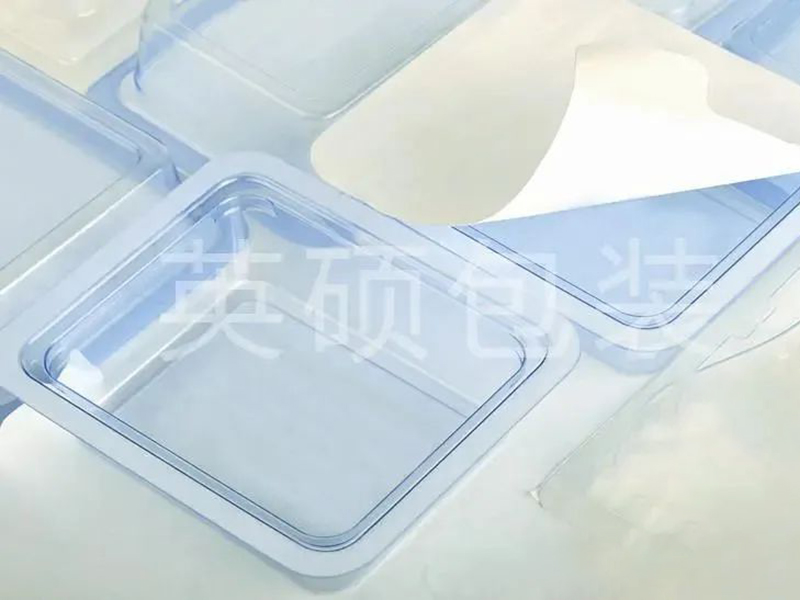
Medical device package serve as the final line of defense in maintaining the sterile status of surgical instruments, implants, and other medical devices. They are not simple containers but rather a sterile barrier crucial to patient safety - indeed, a critical barrier for life!
From plastic pellets to finished products, every step in the manufacturing chain - materials, design, tooling, environment, equipment, and validation - requires meticulous attention to detail. This represents a world of difference from the requirements for ordinary (food/industrial) blister trays. Today, our experts analyze these "life-or-death" differences across six critical dimensions:
Medical Grade: The foundation! Must comply with ROHS environmental directives, pass ISO 10993 "Biological Evaluation of Medical Devices" testing (ensuring non-toxicity, non-allergenic, etc.), and meet ISO 11607 requirements for sterile barrier and microbial barrier properties. High-end materials like Eastman 6763 and SK S2008 PETG are commonly used to ensure no harmful substance migration during high-temperature forming and sterilization (such as EO or gamma radiation).
Ordinary Grade: Mainly meets food-grade (e.g., FDA) or industrial standards with significantly lower requirements. Market irregularities (e.g., industrial PVC simulates PETG, RPET simulates APET) can lead to hazardous or even carcinogenic substance migration under medical sterilization conditions, creating serious safety risks. Wrong material selection can turn life-saving devices into sources of danger!
Medical Grade: Design requires systematic consideration: material properties, device shape and protection, sterilization compatibility, and clean opening convenience for medical staff in sterile fields (e.g., easy-tear features, snap-fit designs), while ensuring maintained sterility throughout shelf life. Details like seal width, tear strength, and seal integrity require careful design and validation.
Ordinary Grade: Primarily focuses on basic protection, containment, and cost efficiency, with minimal consideration for sterile opening, long-term sterility maintenance, or specific sterilization compatibility.
Medical Grade: Typically uses high-performance aluminum alloy molds (preferably 6061 aluminum). High precision, superior finish, excellent thermal conductivity, and durability form the foundation for dimensional stability, sharp edges, and smooth, clean surfaces - directly impacting packaging functionality and appearance.
Ordinary Grade: Often uses low-cost materials (e.g., electroplated copper on plaster master molds) and processes. Lower precision and finish requirements can result in product burrs, dust residue, and dimensional deviations, completely failing to meet medical packaging's stringent cleanliness and precision requirements.
Medical Grade: Must be manufactured in no less than Class 100,000 (ISO Class 8) cleanrooms, strictly following ISO 13485:2016 Quality Management Systems for Medical Devices. Stringent controls for bioburden and insoluble particles (especially for Class III implants). Clean environments are critical barriers preventing contamination during production.
Ordinary Grade: Typically produced in ordinary facilities without strict cleanliness requirements, presenting high risks of microbial and particulate contamination, making them completely unsuitable as sterile barriers.
Medical Grade: Prefer negative-pressure (vacuum) forming machines: Enhanced flexibility: Adapts to medical packaging's "multi-variety, small-batch" characteristics with easy mold changes. Controlled process: Enables personnel monitoring for timely detection of material wrinkles, scratches, etc. Lower contamination risk: Single-piece/small-batch removal reduces scratching; specific cutting methods reduce linting; avoids dust from high-speed chains. Superior stress control: Gentler forming reduces material deformation risks.
Ordinary Grade: Commonly uses positive-negative pressure combo machines (especially for food packaging) prioritizing efficiency: High-speed automatic stacking easily causes hidden scratches (difficult to detect by light inspection, easily damaged during disassembly). High-speed cutting and chains generate lint and dust, significantly increasing contamination risk. Aggressive parameters increase stress deformation risks. Medical packaging emphasizes risk prevention and detail control - equipment selection logic fundamentally differs from ordinary packaging!
Medical Grade: Requires comprehensive validation per ISO 11607, demonstrating effectiveness throughout production, sterilization, transportation, storage, and use cycles. Key tests include: Bacterial Barrier Testing (ASTM F1608) - Barrier function; Toxicological Testing (ISO 10993) - Biosafety; Peel Strength Testing (ASTM F88) - Seal reliability; Leak Testing - Seal integrity; Bioburden and Particulate Testing - Production cleanliness; Aging Testing (ASTM F1980) - Shelf-life performance; Sterilization Compatibility & Residual Analysis - Sterilization compatibility; Transportation Simulation Testing (ASTM D4169) - Transportation protection; Stacking Testing - Warehousing load capacity.
Ordinary Grade: Simple validation requirements, typically only basic physical properties or simple seal tests, without medical-grade's complex biocompatibility, bacterial barrier, aging, or sterilization compatibility validation.
The differences between medical and ordinary blister trays represent fundamental distinctions in regulatory compliance, risk control levels, and responsibility for life safety. The reliability of this "critical barrier" is built upon the entire chain of high standards from materials to validation.
info@yinsopack.com
+86 15014837000(Wechat/WhatsApp/Skype)
NO.59 Meilin Road, Dalingshan Town, Dongguan City,Guangdong Province, China
Get a Free Prototype + Compliance Report Within 5 Days
Yinso Packing has been a leading figure in the medical packaging industry since 2007. We are committed to providing reliable, cost - effective, and innovative rigid thermoformed packaging solutions to top medical companies.
© 2025 Dongguan Yinso Medical Packaging Co.,Ltd All Rights Reserved.
AddressNO.59 Meilin Road, Dalingshan Town, Dongguan City,Guangdong Province, China
Emailinfo@yinsopack.com
Tel(Wechat/WhatsApp/Skype)+86 15014837000
About Us Medical Blister Packs Products Capabilities Blogs Contact Us


