
Email:info@yinsopack.com
Phone:+86 15014837000
Welcome to Dongguan Yinso Medical Packaging Co.,Ltd.
Welcome to Dongguan Yinso Medical Packaging Co.,Ltd.


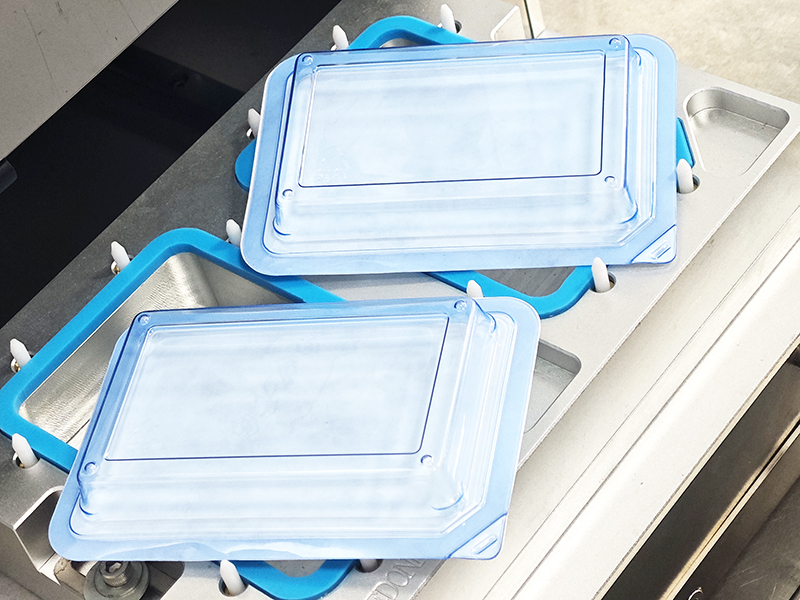
Equipment operating conditions: Verify power supply and operating environment; ensure that core design parameters such as sealing temperature, cooling temperature, sealing speed, heat‑seal pressure, and pre‑heat time can operate stably within specified ranges without deviation.
Cleanroom environment compliance: Confirm that the dedicated cleanroom for sealing meets regulatory grade requirements; layout is rational and sealing operations do not cross‑contaminate adjacent processes or the overall cleanroom environment.
Equipment functionality verification: All sealing equipment must accurately run according to preset parameters – responsive, smooth, and error‑free.
Software validation: For intelligent control systems, validate software functions, parameter storage, and data traceability to prevent process deviations due to program vulnerabilities.
Technical documentation archiving: Retain original equipment drawings, instruction manuals, technical data sheets, and other relevant documents for traceability.
Control system establishment: Develop equipment maintenance procedures and implement regular calibration and verification plans for temperature, pressure, and time monitoring devices to ensure all measuring instruments remain accurate and controlled.
Standard operating procedures (SOPs): Create detailed, practical SOPs for sealing equipment to standardise all operational steps.
Personnel qualification: All sealing operators must complete specialised training and demonstrate competence in cleanroom protocols, standard sealing procedures, and risk control – operating only after certification.
Critical parameter identification and verification: Based on the characteristics of the blister packaging materials (suitable for rigid blister trays, Tyvek lidding, composite films, etc.), accurately identify key parameters such as temperature, pressure, speed, and pre‑heat time. Use high‑precision measuring devices to plot standard characteristic curves and define acceptable parameter ranges.
Challenge testing under multiple conditions: For equipment with defined limit parameters, conduct trial runs at three settings – upper limit, centre value, and lower limit. For parameters with unknown limits, use designed experiments (e.g., orthogonal arrays) with multiple parameter combinations to precisely determine the acceptable process window. Each parameter set should be tested with at least 10 samples to ensure statistical relevance.
Sample requirements during OQ: Empty sterile blister packaging (without device) may be used, focusing solely on sealing performance validation.
Dual performance verification: All test samples must be tested for package integrity and seal performance both before and after sterilization, ensuring that the sealing process withstands the sterilization cycle without damage, leaks, or seal failures.
Instrument calibration control: Establish periodic calibration schedules for all monitoring sensors, displays, and testing instruments to ensure all data are accurate, valid, and traceable.
Actual sample criteria: During PQ, the blister packaging must contain the actual medical device or a suitable simulation equivalent – fully reflecting real production conditions and eliminating deviations from empty‑pack testing.
Comprehensive performance testing: Focus on two core indicators – package integrity and seal integrity – tested both before and after sterilization. For breathable materials like Tyvek, burst and creep tests may be exempted per relevant standards, strictly adhering to industry‑specific guidelines.
Full‑scenario simulation: Cover all possible production scenarios, including parameter adjustments, mould changes, equipment start‑up and shut‑down, restarts, power fluctuations, etc. – ensuring sealing quality remains stable across all conditions and preventing batch‑scale quality issues.
Sufficient data sample: Aggregate data from at least 20 consecutive production batches for statistical evaluation.
Validated test methods: All product testing methods must be validated, generating quantitative and analyzable data – avoiding vague pass/fail records.
Complete batch records: Each batch record must clearly document sealing parameters, environmental conditions, and operational steps.
Controlled process variables: All critical variables – packaging material condition, cleanroom class, microbial control, sealing parameters – must remain within defined limits and under control.
Complete process data: Retain all in‑process QC results, deviation reports, and finished‑product test data – forming a closed‑loop dataset that supports process validation.
When equipment or process reaches a predefined production cycle – perform periodic revalidation.
When any change occurs to the medical device product, sterilization method, sterile packaging material, sealing process, or sealing equipment.
New equipment: Full IQ + OQ + PQ.
Change in packaging material: IQ may be waived; focus on OQ and PQ revalidation.
Routine periodic revalidation: IQ and OQ may be waived; prioritise PQ. If PQ fails, perform full revalidation.
Approved validation protocol: Clearly defines team roles, implementation plan, test procedures, and acceptance criteria.
Complete validation records: Includes equipment setup, test data, environmental monitoring, sample test results, and all process logs.
Supporting system documents: Equipment operation SOPs, maintenance schedules, calibration procedures, and original technical data from equipment and material suppliers.
Approved validation report: Finalises the sealed process parameters, equipment operating standards, and periodic revalidation intervals – establishing a long‑term compliance baseline.
info@yinsopack.com
+86 15014837000(Wechat/WhatsApp/Skype)
NO.59 Meilin Road, Dalingshan Town, Dongguan City,Guangdong Province, China
Get a Free Prototype + Compliance Report Within 5 Days
Yinso Packing has been a leading figure in the medical packaging industry since 2007. We are committed to providing reliable, cost - effective, and innovative rigid thermoformed packaging solutions to top medical companies.
© 2025 Dongguan Yinso Medical Packaging Co.,Ltd All Rights Reserved.
AddressNO.59 Meilin Road, Dalingshan Town, Dongguan City,Guangdong Province, China
Emailinfo@yinsopack.com
Tel(Wechat/WhatsApp/Skype)+86 15014837000
About Us Medical Blister Packs Products Capabilities Blogs Contact Us


