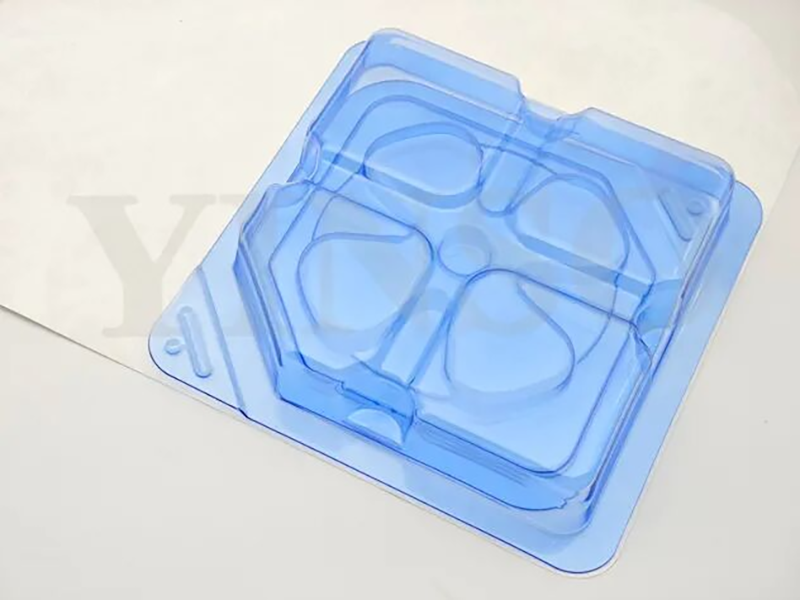
In the compliance system for terminally sterilized medical devices, sterile packaging is by no means a simple consumable — it is the core barrier that ensures the device remains sterile throughout its lifecycle and meets regulatory requirements. As a professional terminal sterilization medical packaging manufacturer, we have deep expertise in the regulatory framework and combine our knowledge with the core provisions of GB/T 19633 to clearly explain the essential requirements and process validation standards for terminal sterilization medical packaging, helping medical device companies achieve precise compliance and efficient regulatory approval.
1. Core Compliance Logic for Sterile Packaging: Two Essential Responsibilities
For all manufacturers of terminally sterilized medical devices, two core responsibilities must be fulfilled to ensure product sterility and successful market access — this is the fundamental logic of terminal sterilization medical packaging compliance:
First, strictly complete sterilization process validation and routine control in accordance with industry standards, ensuring that the sterilization process is stable and effective, eliminating microbial contamination at the source;
Second, rigorously verify the compliance of the packaging system used, which must meet GB/T 19633.1 "Packaging for terminally sterilized medical devices – Part 1: Requirements for materials, sterile barrier systems and packaging systems" (equivalent to ISO 11607-1:2006), fully demonstrating that the packaging is compatible with the intended sterilization process and maintains its sterile barrier capability throughout the entire product lifecycle.
In essence, GB/T 19633.1 is the foundational benchmark standard in the field of terminal sterilization medical packaging. All related standards for packaging testing, process validation, and performance evaluation are designed to verify compliance with this core standard — it is the mandatory baseline for terminal sterilization medical packaging.
2. Scope and Core Requirements of GB/T 19633.1
As the primary industry‑wide standard, GB/T 19633.1 specifies requirements across the entire chain of terminal sterilization medical packaging, covering packaging raw materials, pre‑formed sterile barrier systems, packaging system design, and design validation.
The standard is broadly applicable and provides guidance for all stakeholders in the supply chain, including raw material suppliers, sterile barrier system manufacturers, medical device producers, and end‑user healthcare facilities. It serves as the authoritative basis for production, selection, use, and acceptance of terminal sterilization medical packaging.
3. 12 Core Performance Indicators for Medical Sterile Packaging Selection
During packaging selection, custom solution design, and product development, we comprehensively evaluate all performance indicators based on the device category, sterilization method, storage and transport scenarios, and shelf‑life requirements. The key considerations include:
1. Sterilization compatibility: Perfectly compatible with EO, steam, irradiation, and other sterilization processes — no damage, no failure, and no leachables after sterilization.
2. Safety in use: Meets toxicological and chemical requirements — non‑toxic, non‑leaching, and chemically inert to the device.
3. Barrier protection: Adequate microbial, light, and gas barrier properties to resist external contamination.
4. Appearance quality: Uniform gloss and transparency, defect‑free, supporting visual inspection and quality control.
5. Physical performance: Puncture resistance, abrasion resistance, tear resistance, flex resistance; stable thickness and grammage for high‑volume production and long‑distance transport.
6. Sterile integrity: Maintains sterile barrier integrity throughout — no pinholes, cracks, or hidden leaks.
7. Seal performance: Adequate seal strength and burst strength, easy to open without shredding or breakage.
8. Processability: Compatible with automated packaging equipment, stable heat sealing, high yield.
9. Printability: Supports clear printing of lot numbers, expiry dates, and traceability codes with durable adhesion.
10. Cleanliness: Dust‑free, particle‑free, contaminant‑free, meeting cleanroom production standards.
11. Performance stability: No aging, delamination, or failure during long‑term storage.
12. Environmental adaptability: Withstands temperature/humidity changes, vibration, and compression during transport and warehousing.
4. Microbial Barrier Performance — Testing Methods for Breathable and Non‑Breathable Materials
Microbial barrier performance is the core indicator that determines the protective capability of sterile packaging and ensures product sterility. Packaging materials for terminal sterilization medical packaging fall into two categories: non‑breathable and breathable, each with dedicated test methods.
For non‑breathable packaging materials, the impermeability test described in Annex C of GB/T 19633.1 can be applied. Once impermeability is verified, the material is deemed compliant with microbial barrier requirements.
For breathable packaging materials compatible with sterilization processes, the industry relies on three internationally recognized test methods — ASTM F1608, DIN 58953‑6, and ASTM F2638 — all fully aligned with ISO 11607‑1. These methods provide accurate and valid results that are directly acceptable for product registration submissions.
5. Shelf‑Life Validation — Stability Testing Requirements
Stability testing of the sterile barrier system is a critical component of packaging design validation and is a key focus during regulatory review and registration audits, as it directly determines the claimed shelf‑life compliance.
Industry standards require that stability testing must include both accelerated and real‑time stability studies — they cannot be conducted in isolation:
Accelerated stability testing: Uses elevated temperatures to rapidly simulate long‑term aging, shortening the test cycle and accelerating R&D and submission timelines.
Real‑time stability testing: Monitors the packaging under normal storage conditions over the claimed shelf life — this is the only direct and conclusive evidence of actual shelf‑life performance.
Critical reminder: If discrepancies arise between accelerated and real‑time results, real‑time data shall take precedence as the final basis for determining the shelf‑life claim, ensuring the expiration date is accurate, compliant, and reliable.
6. Packaging System Performance Testing — Simulating Full‑Process Conditions
Performance testing of the packaging system is an indispensable part of design validation. The core objective is to simulate the entire product journey — manufacturing, sterilization, handling, warehousing, and transportation — to verify that the packaging remains structurally intact and barrier‑effective after exposure to various stresses and environmental factors, without failure, leakage, or performance degradation.
In industry practice, we follow the YY/T 0681 series, parts 15 and 16, to conduct comprehensive performance testing, fully validating the packaging system's adaptability and long‑term stability under real‑world conditions, thereby providing solid support for our clients' regulatory clearance.
Conclusion
Compliance of sterile medical packaging stems from rigorous standard implementation, precise material selection, thorough validation, and stable processes. As a professional
terminal sterilization medical packaging manufacturer, we consistently align with GB/T 19633.1, ISO 11607, and other authoritative standards — from material screening and performance testing to process validation and stability studies — ensuring full‑chain quality control. We provide compliant, stable, safe, and long‑lasting customized
terminal sterilization medical packaging solutions for a wide range of terminally sterilized medical devices, helping our clients successfully pass registration audits and capture market share with confidence.
✅ Terminal sterilization medical packaging is the backbone of device sterility assurance. By understanding and implementing the requirements of GB/T 19633.1 and ISO 11607, manufacturers can ensure robust sterile barrier systems that protect patient safety and meet global regulatory expectations.
© YINSO Medical Packaging — Expert in terminal sterilization medical packaging solutions, regulatory compliance, and process validation.
Contact Us
- E-mail:
info@yinsopack.com
- Tel:
+86 15014837000(Wechat/WhatsApp/Skype)
- Address:
NO.59 Meilin Road, Dalingshan Town, Dongguan City,Guangdong Province, China
- 7x24 hours On Iine Service